Grieving Your Past Selves
Who are you without the job? It's a question most of us avoid until we can't anymore. AI is making it harder to avoid.
Who are you without the job?
Much of the fear and concern around AI isn’t so much about AI—and yes, there are real concerns there—but the part that goes unspoken while remaining ever present is the threat AI poses to how our identities… or at least how we identify.
I wrote about this before in You Are Not Your CMS, where I talked about how we should keep our identities small, borrowing from Paul Graham. About how perhaps the growth of AI is our opportunity to steer more into the humanities to bolster ourselves, rather than aspects of our jobs because, after all, we are not merely our jobs… those are things we do, not who we are.
But of course, that is all much easier said than done.
I recall during a Presidential election many years ago, coal workers were concerned about the future of their jobs. About their place in society. A popular response at the time was that they should all just go get training in more modern analogues for their careers, like working on wind turbines.
Easy to say, not easy to do. Because it’s not just a job, it’s an identity.
I don’t believe we have a fixed identity. Over the years I’ve been a summer camp counselor and program manager, a college radio DJ, a car wash manual drying attendant, a nonprofit professional, an email marketer, a husband, a bit of a punk, a bit of a preppy, an outdoorsman, and so many more things… all versions of me that have come and gone like the many versions of you that have come and gone.
Just over a month ago, I left Adobe. I was, and genuinely remain, thrilled to have been joining Gradial. But it was tough.
I’d been at Adobe for 8.5 years. Longer than I’d been… well, anywhere. Any job, any school. I’d been there for most of my son’s life. My managers and team members at Adobe had supported me through the loss of loved ones. They lifted me up and helped me get through a divorce, when I could barely bring myself to get out of bed, let alone effectively work for 2+ weeks.
I had assignments that took me to San Jose, San Francisco, Kansas City, New York, Chicago… and Berlin, Amsterdam, and Bangalore.
I made deep, meaningful friendships that I hope to maintain for many years to come. For many of those years, I had a manager who felt more like a long lost brother and who I’ve come to believe is among the most influential people in my life to date.
And then suddenly I was leaving.
I was honestly thrilled. It was time. But it was hard.
All of that stuff… from the friends to the stamps in my passport. They didn’t just feel like part of my story, they felt like part of who I was.
It is easy to write off how difficult those transitions are when you’re not the one whose identity is being threatened. Be that by societal changes and cleaner energy technology, a new technology replacing the one you know so well at work, or AI coming in and changing, or eliminating, your role altogether.
In 2026, we’ve all been exposed to plenty of talk about grief and we’ve certainly all experienced plenty of it. You’ve likely grieved the loss of loved one, grieved the loss of the world pre-Covid or maybe even pre-9/11, grieved the loss of a relationship.
But how do you grieve your career?
Even in a situation like mine, where you’re excited to move on to a new opportunity, there is still grief to process. There is pain to be felt.
I think the moment it first crystallized was during what became the "Read the Room" conversation I wrote about in my last piece.
I want to be careful here, because that piece wasn't about the feedback itself, and neither is this one. It was about what happens when expectations go unspoken and information goes unshared. About how humans, in the absence of full context, inevitably start writing their own stories to fill the gaps.
What I didn't say in that piece is that I was doing exactly that.
Something about that conversation carried weight I couldn't quite name. It wasn't the feedback… I've always welcomed feedback, sought it out, tried to build a career on it. It was what felt present but unspoken underneath it. And in that gap, I found myself doing what humans do: constructing a narrative from the available signal.
The narrative I kept arriving at was that it was time.
Not because of one conversation. Not because of one piece of feedback. But because that moment had a way of making something I'd been quietly sensing suddenly visible. Like a word you couldn't remember suddenly appearing, obvious, right in front of you.
Who was I if I wasn't at Adobe?
Who are you if you’re not at your company or in your role?
When those external identities fall away, what's left?
As AI continues to progress and yes, likely takes many jobs, more and more of us are going to have to face that question.
Relevant I think, is a conversation with my ten year old son this past weekend. He got in a bit of trouble for a bad decision he’d made and when discussing this with him, I made sure to separate the action from the person. I told him that he was a good kid and gave him examples of how I know that—how I’ve seen and heard he treats others, how well he listens, how kind and hardworking he is. And then I told him that what’d he’d done was not good behavior. I told him that we can make bad decisions, do bad things, and not be defined by those things, especially if they are not our norm.
Similarly, we are not our jobs. We are not merely parents, board members, marketers or tech folks, neighbors, friends, golfers, whatever. Those, like the kind of trouble a 10yo gets into, are things we do. Not who we are.
We spend years constructing identities from jobs, titles, hobbies, relationships, accomplishments, and affiliations. Useful things, certainly.
But over time they can become so layered that we forget they were additions rather than foundations.
So who am I post Adobe?
Well, I like to think I’m a learning, growing, and valued member of the team at Gradial… but I’ve also allowed myself to open new aspects, closer to the core. I spent my last two weeks at Adobe hiding from the feelings of loss by digging up much of my backyard and installing over 100sqft of new landscaping… then I had ChatGPT help me throw a party in it.
I’ve also reconnected with my love of writing.
Maybe the goal of grieving identities lost isn’t optimizing or new identity maxxing. Maybe it’s to look back gratefully on the prior versions of ourselves that got us where we are today.
And maybe, as AI replaces more and more of those layers we've used to build our identities, we'll have an opportunity to reconnect with whatever was there before them.
Not because AI is forcing us to become someone new.
But because it's forcing us to remember that we've been many people before.
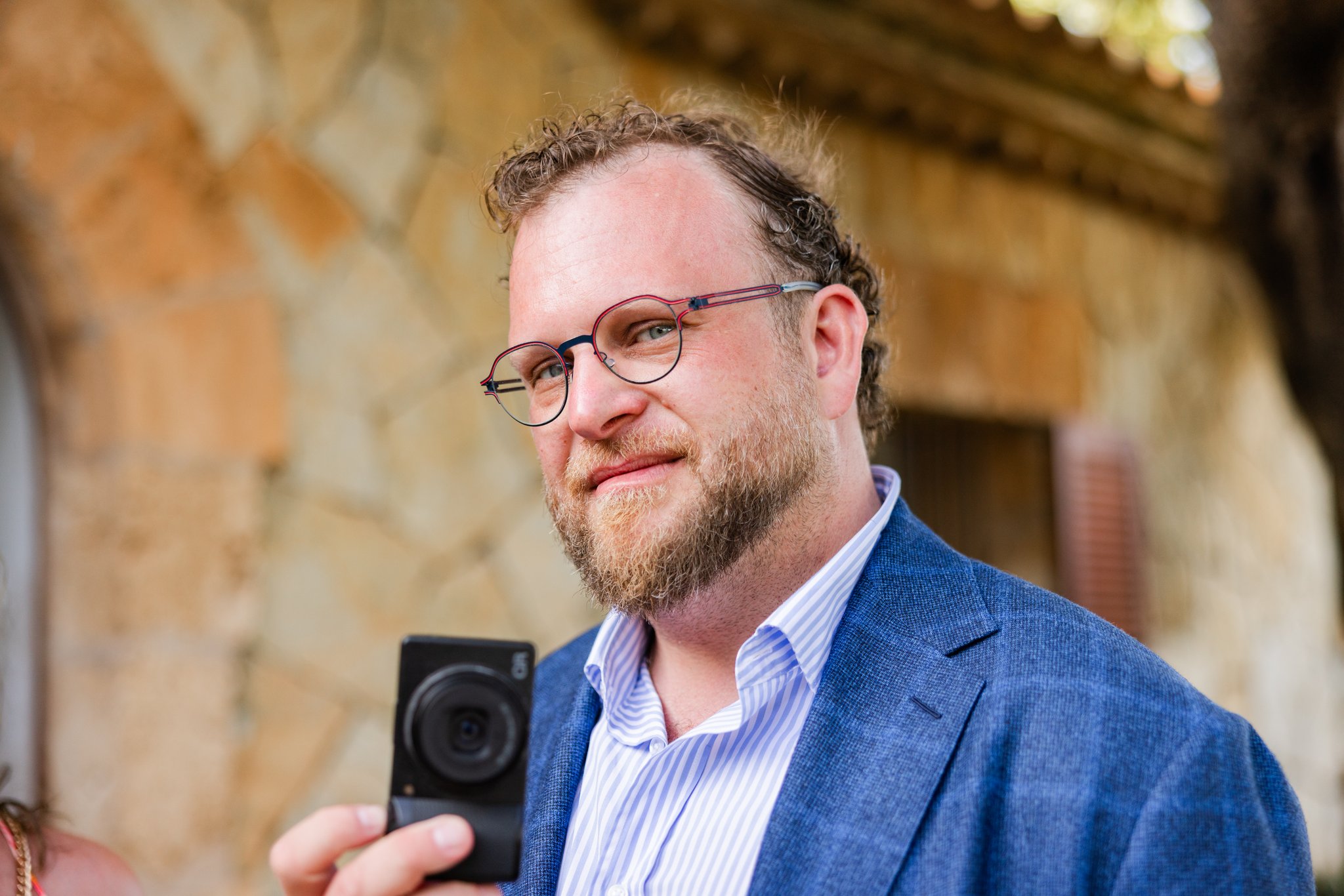
Ryan Yepsen
Ryan writes about enterprise AI, customer reality, systems thinking, and the operating conditions that make meaningful execution either possible or painful.